
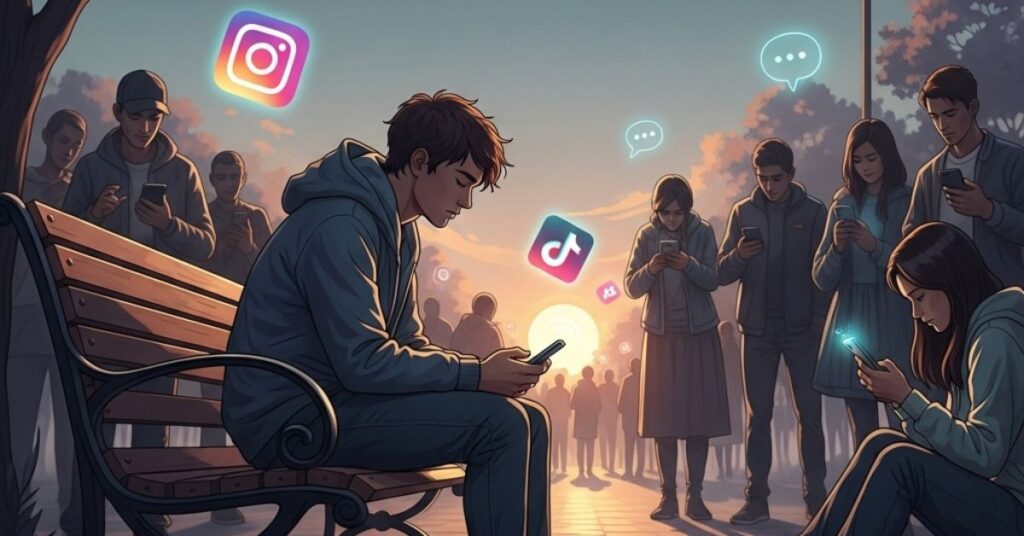
Young adults today are at the center of a growing Loneliness Epidemic. Despite being digitally connected, many struggle with isolation, life transitions, and emotional challenges. This article explores why people aged 18–24 face rising disconnection and what factors make this generation especially vulnerable to loneliness.
1. 📱 Digital Connection, Real-Life Disconnection


- Over-reliance on social media and texting has replaced face-to-face interaction.
- Platforms like Instagram and TikTok create false realities that lead to comparison, inadequacy, and low self-worth.
- Many young adults have “followers” but few real friends.

2. 💔 Transition Turmoil
- Ages 18–24 are filled with life transitions:
- Leaving home for the first time
- Starting college or work
- Breaking away from childhood friendships
These changes disrupt support systems and social routines.
3. 🧠 Mental Health Crisis
- Rising rates of anxiety, depression, and suicidal ideation plague this age group.
- Emotional instability compounds loneliness and makes it harder to form new bonds.
- Many lack the emotional tools or therapy access needed to cope.
4. 🏠 Living Independently—But Alone
- Many live alone for the first time or feel emotionally detached in shared spaces.
There’s a gap in social safety nets: no close neighbors, no family nearby, and few community ties.
5. 🎓 College Environment or Work Isolation
- In college, students may struggle to “fit in” or face rejection, bullying, or culture shock.
In early careers, remote jobs or lack of mentorship can cause professional loneliness.
6. 🚫 Fear of Vulnerability
- Young people are taught to “look strong,” not “ask for help.”
Emotional openness is stigmatized, which makes loneliness feel shameful instead of natural.


